 Posted by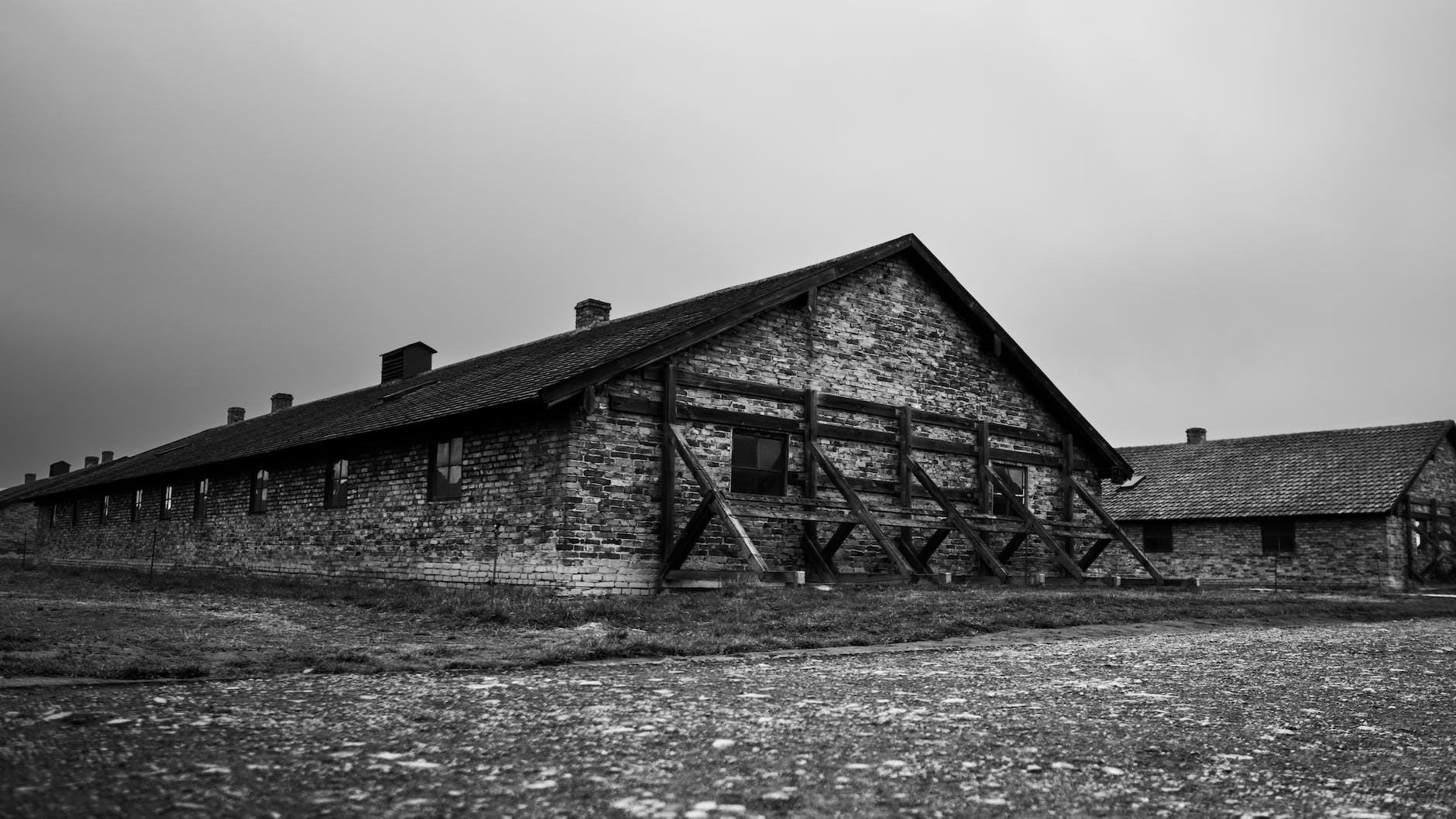
During what was otherwise a pretty aimless college experience for me at Princeton, I greatly enjoyed focusing my studies on French representations of the Holocaust through film and writing. One of the great movies that I studied is a lesser-known film by my favorite director, Louis Malle, called Lacombe, Lucien.
The film is about a French teenager named Lucien who feels isolated and wants to be a part of something during World War II. He has no attachment to either side in the war, but makes an attempt to join the French Resistance, since they are operating guerrilla warfare near his home. However, the local Resistance leaders tell him that he is too young and inexperienced to join them. Feeling rejected, Lucien eventually ends up joining the German Gestapo instead.
What ensues throughout the film is Lucien’s very dark turn to a person who is complicit in terror against Jews and anyone else who stands in the way of the Nazis. Keep in mind, Lucien isn’t even old enough to drink, nor does he understand the gravity of his actions. But he performs these cruel actions nonetheless. When asked about the theme of the film, Malle famously stated that it is about “the banality of evil.” Indeed, it is well-documented that even the Nazis were mostly comprised of everyday people who became capable of the worst horrors imaginable through fear, propaganda, and the need to follow the proverbial pack.
I fear that I am seeing signs of Lucien everywhere in the world today. To be sure, there is a concerningly large number of people who are overtly expressing their anti-Semitism, showing up to rallies yelling “Gas the Jews” or “Kill all the Jews!” In Berlin, Jewish homes have been marked, eerily reminiscent of Kristallnacht, and just the other day in Barcelona, protesters defamed the store of a Jewish businessman. These people are not even attempting to hide their anti-Semitism, but I’m not really talking about them. In a way, I’m less worried about those people, because at least they have the integrity to make their intentions very clearly known. But it seems like a concerning number of others playing the role of Lucien, and we should talk about that.
Over the last several years, there has been tremendous division forcing people to align with Team Red or Team Blue. Realistically, however, most issues are nuanced; that is to say, sometimes Team Red is right, sometimes Team Blue is right, and sometimes the answer often lies somewhere in between. Inevitably, this means that anyone who is unequivocally on one team will be confronted by their own intellectual dishonesty when they are forced to take positions that misalign with their own values. Why? For the sake of social acceptance.
I never thought in my wildest dreams that the events of 2.5 weeks ago – people massacred, pregnant women having their stomachs cut open, semi-conscious men being beheaded with garden tools, livestreaming the deaths of relatives through their Facebook pages, and so on – would lead to worldwide protests of support the following day. The amount of mental gymnastics required to justify the largest slaughter of Jews since the Holocaust is disgusting, and yet 24% of college students allegedly believe it is justified based on a recent poll.
What I mean about the banality of evil as it pertains to anti-Semitism is ironically that what we are witnessing all around us is not always overt anti-Semitism; instead, it is spineless cowards who say and do horrible things for the sake of fitting in with their friends. They are all too happy to offend a small minority of people if it ingratiates them amongst a larger population of (allegedly) socially-conscious people, especially if it helps them to feel better about their own privileged lot in life. Indeed, it is mostly well-to-do white liberals who I have noticed participating in some of the most depraved forms of speech, whether they are continuing to allege the now debunked myth that Israel bombed a hospital, or something else. One (now former) friend of mine posted something online about “Never again” applying to all people and not just Jews, seemingly likening the bombings in Gaza to the structured roundup and mass extermination of 6 million Jews all throughout Europe — oftentimes in gas chambers and ovens. It might be a catchy thing to say, and I am sure it is well-intended, hence the banality of evil around us.
What’s perhaps more disturbing is the recent trend of people tearing down posters of hostages all across the globe. We are talking about innocent children and elderly among others – sometimes babies – who are experiencing horrendous conditions for no other reason than that they are Jewish. I do not understand what kind of moral depravity it requires to do such a thing. You certainly will never see Jews put up posters of dead Arabs around their college campus in celebration, because obviously doing so would be a wretched thing to do. When these people are confronted on video about what they are doing, they smile or laugh and never offer any sort of plausible explanation for how it is OK to diminish these victims. They sometimes resort to classic whataboutism – “What about the dead Palestinians” – as if to suggest that caring about the slaughter of innocents is mutually exclusive depending on whether they are Israeli or Palestinian. Many times, the perpetrators of these acts are college students. In one video I watched today, it is a Leftist Jewish student doing it. All this to say, I cannot answer definitively who the anti-Semites are and aren’t – some people are just painfully ignorant – but it should be abundantly clear at this point that even very well-meaning, socially conscious college students are capable of the worst types of evil, and would march us to the next Gulag with glee for God knows what kind of micro-aggression we may inadvertently wage against them.
I’ve watched tirelessly over the last several years as people seemingly unanimously took up the cause of some disaffected social group. First it was black folks in the wake of George Floyd’s murder. We were all made very aware of the systemic racism in the United States and everyone posted black squares and tons of money got poured into programs to eradicate systemic racism. Then during COVID there was a wave of hatred against Asian people, so we all adopted the #StopAsianHate hashtag. And then 1,400 innocent people got massacred in Israel and you can’t even get your run-of-the-mill non-Jewish liberal friend to pause for a moment and unequivocally condemn that act and treat it as an isolated issue without reminding you of the entire context of the situation, or some foreboding about the terrible things Israel would likely do in retaliation. Again: well-meaning, everyday people, but incapable of intellectual consistency in how they display their beliefs, and almost certainly because “fitting in” matters a lot more than “doing the right thing.”
I don’t want to be so dark. I’ve been pleasantly surprised by the number of people who have grown a spine and stepped up. I’ve had many friends reach out to me who would not otherwise normally render support. Many political figures have given strong speeches. It has been encouraging to see so many strong, principled advocates against hatred in all of its forms. I have liberal friends who I have always disagreed with who have been some of the most passionate and staunch supporters of Jews – not necessarily of Israel but of Jews – and for that I am sincerely grateful. For once, we are starting to actually see people being outed for tearing down these posters. Many of them are losing their jobs. I used to think only right wing figures like Kanye West could get canceled over anti-Semitism; I’m pleasantly surprised to finally see an equilibrium in how the issue is being treated.
As I reflect back on my studies of French representations of the Holocaust, I am left thinking of Night and Fog. It is an Alain Resnais movie from 1955 that was actually commissioned by the French government as a warning about the possibility of the Holocaust repeating itself. It masterfully alternates back and forth from black and white images of the Holocaust to present day colored images of the concentration camps, forcing the viewer to reconcile with how this seemingly beautiful place could have once been the scene of humanity’s worst crime. The ending monologue tells you everything you need to know about the banality of evil:
As I speak to you now, the icy water water of the ponds and ruins fills the hollows of the mass graves, a frigid and muddy water, as murky as our memory.
War nods off to sleep but keeps one eye always open.
Grass flourishes again on the inspection ground around the blocks. An abandoned village, still heavy with peril.
The crematoria are no longer used. The Nazis’ cunning is but child’s play today.
Nine million dead haunt this countryside.
Who among us keeps watch from this strange watchtower to warn of the arrival of our new executioners? Are their faces really different from our own?
Somewhere in our midst, lucky Kapos still survive, reinstated officers and anonymous informers.
There are those who refused to believe, or believed for only brief moments.
With our sincere gaze, we survey these ruins, as if the old monster lay crushed forever beneath the rubble.
We pretend to take up hope again as the image recedes into the past, as if we were cured once and for all of the scourge of these camps.
We pretend it all happened only once, at a given time and place.
We turn a blind eye to what surrounds us, and a deaf ear to humanity’s never-ending cry.
 Jeff Kirchick